
E-commerce Platforms, Security and Oh Yeah, The Hacker

The e-commerce platform is a set of tools, software and applications that help businesses with their e-commerce services. An e-commerce platform can be used by businesses of all sizes. There are many different types of ecommerce platforms. Here are some of them:

Ecommerce platforms

E-commerce platforms are a set of tools, software and applications that help businesses with their e-commerce services. They can be used to build an online store or integrate it into an existing website. Ecommerce platforms vary widely in terms of features, cost and complexity.

There are many different types of ecommerce platforms:

  • Open source–freely available software you can use without paying licensing fees; this type is popular among developers because it allows them greater flexibility in customizing the platform for their needs (e.g., Magento)
  • Hosted–a service provided by a third party where you pay monthly or yearly fees based on usage and storage space needed (eBay)

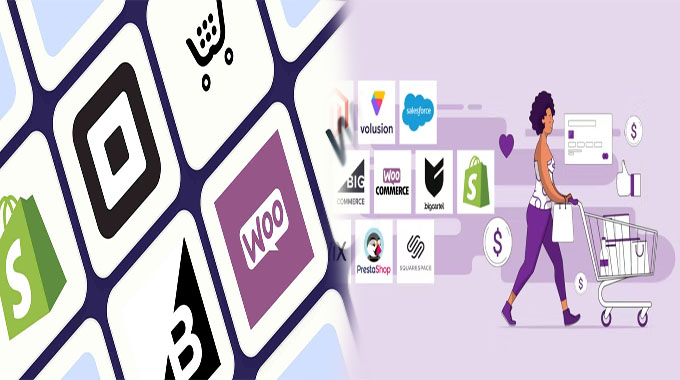
Best E-Commerce Platforms For Dropshipping and Online Retail

Dropshipping is one of the easiest ways to get started in e-commerce. All you need to do is find a supplier, create a store with your dropshipping platform, and start selling. However, not all platforms are created equally. Some have more features than others or even charge higher fees than their competitors. This article will break down each major platform’s strengths and weaknesses so that you can decide which one works best for your business needs before investing time and money into building your store on top of it!

Shopify

Shopify is a powerful e-commerce platform that allows you to create an online store and sell products online. It’s a fully hosted solution, meaning that you don’t need to worry about hosting your site or security. Shopify has a large number of apps and integrations so you can easily add advanced features like payment processing, shipping rates based on location, …

The Best Quick-Start Ecommerce Platforms

E-commerce is becoming a bigger and more important part of the economy every day, and that means more small businesses are trying to get in on the action. If you’re one of them, which platform should you use? There are many different e-commerce platforms out there, each with its own strengths and weaknesses. Here’s what we think:

Shopify

Shopify is an open source, hosted solution that offers a free trial and a developer community. Shopify also has its own app store where you can find apps to help you create your online store. The platform integrates with other services such as MailChimp and PayPal, so you don’t have to worry about setting up those integrations yourself.

BigCommerce

BigCommerce is a popular e-commerce platform that lets you sell online and in-store. It has a large number of features, including a mobile app and an API. BigCommerce also offers free training, support …

How To Fix Network Errors In “Chrome”

If you’re experiencing issues with your Chrome browser, the first thing to try is uninstalling and reinstalling the app. If that doesn’t work, here are some common network errors that you can troubleshoot:

If you see the following error message, it means that the device is not connected to the internet.

If you see the following error message, it means that the device is not connected to the internet.

  • Check your internet connection: Make sure that your computer is connected to a wireless network or has an active Ethernet cable plugged into it. If you’re using a laptop, make sure its Wi-Fi switch is turned on and not in airplane mode (if applicable). If you’ve already checked all these things and are still having issues with Chrome’s network errors popping up every few minutes or so, then proceed with troubleshooting steps 2 through 4 below!

If you see an error

How to fix annoying slow Internet at no cost

If you’re reading this, chances are that your Internet is slow. It’s not your fault though! The problem might be with your router, modem or Wi-Fi network. There are a few easy steps you can take to speed up your connection at home and fix annoying slow Internet at no cost:

Make sure you’re connected to the right Wi-Fi.

  • Make sure you’re connected to the right Wi-Fi.
  • Check your Wi-Fi name, password and security settings.
  • If you’re not sure which Wi-Fi is yours, ask someone in your house.

Reset your modem, router and Wi-Fi access point(s).

If you’re having problems with your Internet, resetting your modem and router may be all that’s necessary.

To do this:

  • Unplug the power cord from both devices (or turn off their switches).
  • Wait 30 seconds to 1 minute.
  • Plug them back in or turn them on again.

Change your DNS settings to 8.8.8.8 or