
How Central Electronic Control Units Replace Decentralized Automotive ECUs in Software-Defined Vehicles

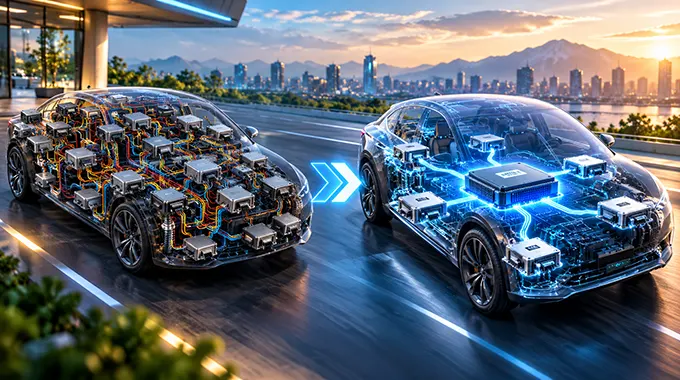
The automotive industry is undergoing a major transformation as manufacturers move toward software-defined vehicles (SDVs). Traditional vehicles rely on numerous electronic control units (ECUs), each designed to manage specific functions such as braking, lighting, engine performance, climate control, or infotainment. Although this decentralized architecture has supported automotive innovation for decades, growing software complexity and connectivity requirements are driving a shift toward centralized computing platforms.
Central electronic control units are becoming a key foundation of software-defined vehicles, enabling manufacturers to consolidate computing resources, simplify vehicle electronics, and deliver new features through over-the-air (OTA) software updates. Combined with domain controllers and zonal computing architectures, this approach changes how automotive software is developed, deployed, and maintained. <Cite refs={[“turn731463search0″,”turn731463search10”]}/>
Understanding Decentralized Automotive ECU Architecture
In a traditional decentralized architecture, individual ECUs operate dedicated vehicle functions. A body control module may manage interior lighting, while separate controllers handle powertrain operations, braking assistance, and other …