
Microcontroller-Based Battery Management System Architectures for Electric Vehicle Thermal Optimization

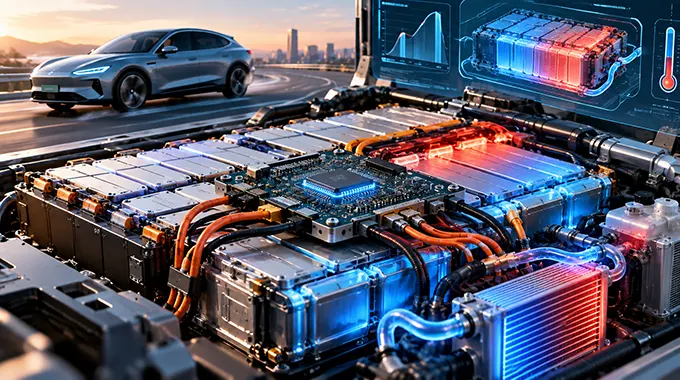
Electric vehicles (EVs) rely on advanced battery systems to deliver reliable performance, extended driving range, and safe operation. At the center of these systems is the Battery Management System (BMS), which monitors battery conditions, estimates available energy, manages charging and discharging, and helps prevent dangerous operating conditions. As battery technology evolves, microcontroller-based battery management system architectures for electric vehicle thermal optimization are becoming increasingly important for improving battery efficiency, durability, and safety.
A well-designed BMS combines hardware components, embedded software, sensing technologies, and control algorithms to maintain battery cells within their recommended operating limits. By integrating state-of-charge (SoC) estimation, thermal regulation, and cell-balancing algorithms, engineers can develop intelligent battery management architectures that respond to changing driving conditions and temperature variations.
Understanding Microcontroller-Based Battery Management Systems
A microcontroller-based BMS uses one or more embedded microcontrollers to collect battery measurements, process sensor data, execute control algorithms, and communicate with other vehicle systems. …