Advantages and Disadvantages of Wide Area Network Services

Wide Area Network is also known as Wide Area Network or Wide Area Linkage. It is an extension of the Local Area Network. Wide Network has several advantages and disadvantages compared to the Local Area Networks. Wide Network supports data packets of billions of bits per second (bps), much more than the Local Area Networks (LANs). The speed of Wide Area Network is way beyond the LANs and therefore makes Wide Area Networks the best option for high bandwidth data transfer.

Wide Area NetworkBroadband internet connection is one of the main reasons behind Wide Area Network. It provides a fast internet connection because of its high capacity and faster transmission over long distances. A wide Network is using to transfer a large amount of data at a very high speed and reduced expense on equipment. Various Wide Area Networks are used for communication, internet access, etc.

One Wide Area Network is made …
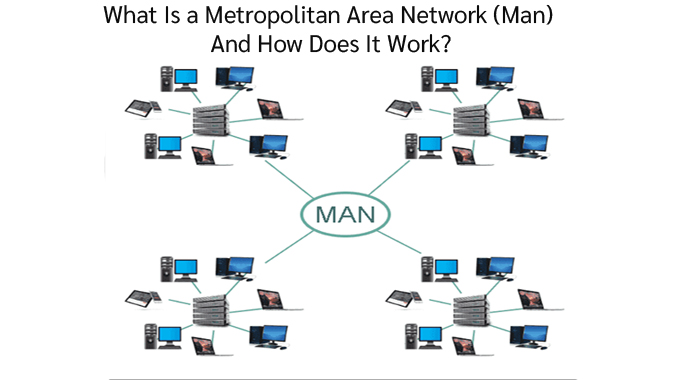
What Is a Metropolitan Area Network (Man) And How Does It Work?

A Metropolitan Area Network (ANN), also known as a Metropolitan Internet Connection, is used by many internet service providers (ISP’s) and internet users who want the capacity to connect to several computers within a relatively small area. It is similar to a Local Area Network but instead of having one main link, a Metropolitan area Network has several separate links. This allows the user to get internet service from a computer in the city center and another computer at home or office to access the internet from a computer in another part of the city center. The most important thing about a Metropolitan Area Network is that it provides fast internet service because the speed of internet connection is guaranteed to be quite high. To understand the topology of a typical Metropolitan area Network, it helps to look at how they work.

A metropolitan area network (man) is made up …

Installing Campus Area Networks (Can)

A Wide Area Network is also known as a LAN or campus network. As have already mentioned above it’s smaller than the traditional broader area network and several Local Area Networks (LAN) join in on a single organization or zones to create a Campus Area Network (CAN). So, when someone says of the corporate networks within the particular geographical location, you could easily guess that it’s campus network. The term itself implies a physical location of a corporation within a specific location. The CAN have various features and services, that may include but are not limited to, the following: communication features, including voice, data, and unified communications features, access to the Internet, secure key distribution, management of secured networks and devices, including firewall, intrusion detection and prevention, and more. However, the feature that makes the CAN stand out from other networks is its versatility and the fact that any given …

An Overview of Wireless Local Area Network Technology

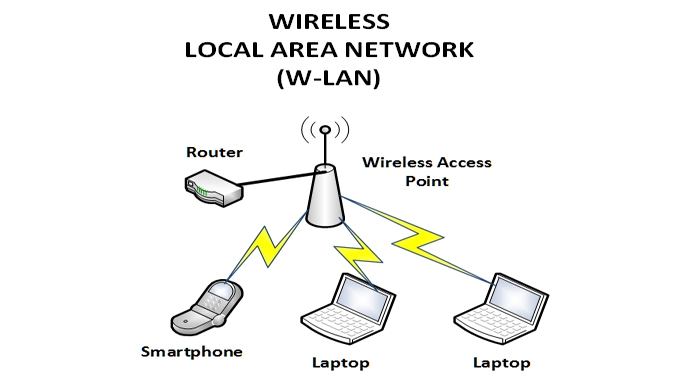
Wireless Local Area NetworkA WLAN provides wireless connectivity over short to long distances with radio waves rather than traditional electrical network cabling. A WLAN extends already existing wired local area networks (LAN) to computers not attached to the LAN directly. The term ‘wireless’ denotes that the system does not require any wires connecting the computers or devices to the network. It uses radio signals for this purpose.

There are four main types of wireless local area networks: single-mode, multimode, bridged, and a packet switch. Each has its pros and cons and can be used for various applications. In single-mode networks, the primary (and least important) mode of connectivity is fixed and the secondary mode covers either one or two modes. Bridged and packet switch networks combine the features of both single and dual-mode networks. The fourth network type offers faster connectivity and provides more efficient power consumption.

An example of a single-mode network …

Advantages and Disadvantages of Local Arean Network

A local area network (LAN) refers to the network which connects computers inside a very limited geographical area, such as colleges, schools, or universities. A LAN is a logical connection between devices that are located at different places. They offer a useful method for sharing resources among end-users. The term LAN was first used in 1982 by Bill Atkinson, who distinguished it as a logical interconnection system, in which multiple links could be established between computers through their location. This network has been very useful for computers because the number of computers on the network does not matter much unlike the Internet, where there are hundreds of millions of IP addresses to be dealt with.

Today, a Local Area Network has emerged as one of the most popular technologies used to connect computers and allowing them to share files and information. There are many advantages to using a Local Area …