How Edge AI Powers Autonomous Vehicle Perception Systems

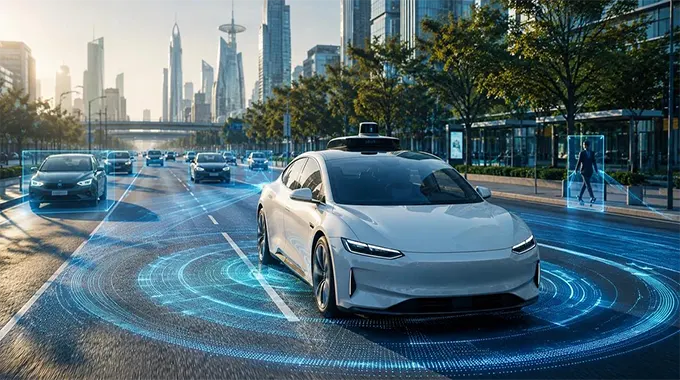
How Edge AI Powers Autonomous Vehicle Perception Systems

Autonomous vehicles must understand their surroundings continuously and make driving decisions within fractions of a second. They need to detect pedestrians, recognize traffic signs, estimate the distance to nearby vehicles, and identify potential hazards while moving through changing environments. Achieving this requires more than advanced sensors. It also demands powerful computing systems capable of processing large amounts of information with extremely low latency.

Real-Time Edge AI makes this possible by bringing artificial intelligence processing directly …
Read More
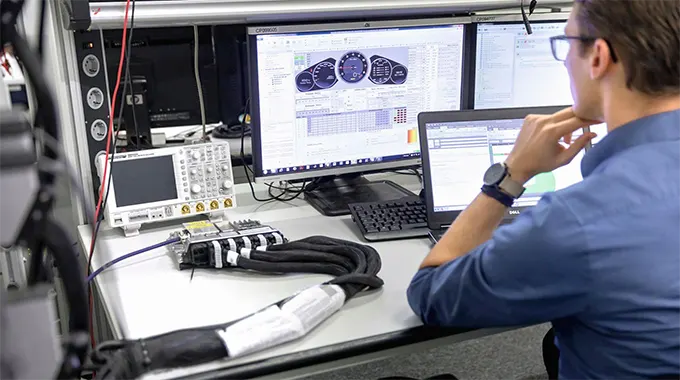
Automotive Hardware-in-the-Loop (HIL) Simulation & Testing

Automotive Hardware-in-the-Loop (HIL) Simulation & Testing

Modern vehicles rely on sophisticated electronic control units (ECUs) to manage everything from engine performance and braking systems to battery management and advanced driver assistance. Before these systems enter production, engineers must ensure that their hardware and embedded software can respond reliably under a wide range of operating conditions. Traditional vehicle testing alone can be expensive, time-consuming, and difficult to reproduce.

Hardware-in-the-Loop (HIL) simulation offers a practical solution. It allows engineers to connect real automotive …

Read More
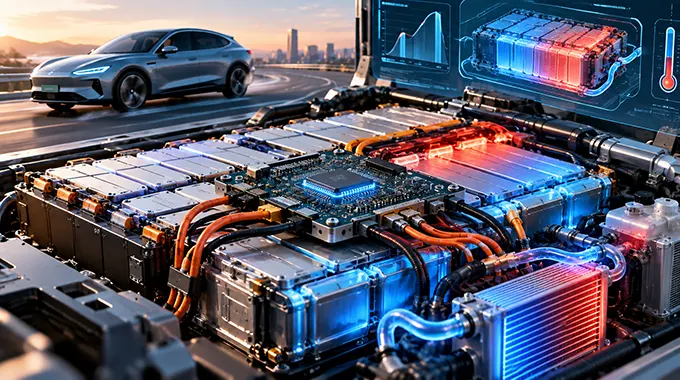
Microcontroller-Based Battery Management System Architectures for Electric Vehicle Thermal Optimization

Microcontroller-Based Battery Management System Architectures for Electric Vehicle Thermal Optimization

Electric vehicles (EVs) rely on advanced battery systems to deliver reliable performance, extended driving range, and safe operation. At the center of these systems is the Battery Management System (BMS), which monitors battery conditions, estimates available energy, manages charging and discharging, and helps prevent dangerous operating conditions. As battery technology evolves, microcontroller-based battery management system architectures for electric vehicle thermal optimization are becoming increasingly important for improving battery efficiency, durability, and safety.

A well-designed BMS …

Read More
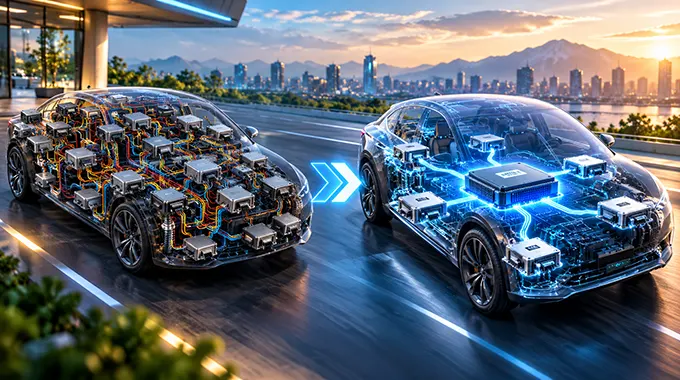
How Central Electronic Control Units Replace Decentralized Automotive ECUs in Software-Defined Vehicles

How Central Electronic Control Units Replace Decentralized Automotive ECUs in Software-Defined Vehicles

The automotive industry is undergoing a major transformation as manufacturers move toward software-defined vehicles (SDVs). Traditional vehicles rely on numerous electronic control units (ECUs), each designed to manage specific functions such as braking, lighting, engine performance, climate control, or infotainment. Although this decentralized architecture has supported automotive innovation for decades, growing software complexity and connectivity requirements are driving a shift toward centralized computing platforms.

Central electronic control units are becoming a key foundation of software-defined …

Read More
Back To Top